Lesson Objectives- How to be Safe, Responsible, and Respectful while online
Procedures- Teaching students the importance of being safe online while learning the “Pause and Think” song.
Materials- A coloring book, online video of the Pause and Think song, Poster of the song lyrics
Evaluation- After the students learn the Pause and Think song, I will evaluate them by having a class “Pause and Think” moment to reflect on what it means. Students will have the opportunity to express what being safe, respectful, and responsible online means.
Key Words- Responsible, Safe, Respectful, Kind, Pause, and Think.
INSTRUCTION– STUDENTS WILL BE ABLE TO DESCRIBE WHAT IT
ASK STUDENTS WHAT BEING A MEANS TO BE A GOOD FRIEND ONLINE AND IN PERSON
FRIEND MEANS TO THEM AND WRITE DOWN THEIR RESPONSES ON A SHEET OF PAPER (10 MINS)
MATERIALS/PREPERATION:
SHOW VIDEO AND READ BOOK (15 MINS)
-SHOW A VIDEO OF WHAT IT MEANS TO BE A GOOD FRIEND
-READ THE BOOK “HOW TO BE A FRIEND”
-HAVE STUDENTS DRAW WHAT A FRIEND LOOKS LIKE
ENRICHMENT: HAVE STUDENTS ACT OUT WHAT BEING A FRIEND LOOKS LIKE AND POST IT ON OUR CLASSROOM WEBITE. (20 MINS) EXPLAIN THE IMPORTANCE OF BEING A GOOD FRIEND AND WHAT BEING A GOOD FRIEND ONLINE MEANS (10 MINS)
Students will be able to identify the five senses, identify the five senses and related body parts, and explain how we use the five senses to understand the world around us
ACTIVITY TASKS
Begin by showing the students the
DISCUSSIONS
video “When You Use Your Senses- What do you use for each of your 5 Senses?”
Internet videos to show what we use our five senses for and when we use them.
Paper to draw ear, eyes, noes, mouth, hands
Markers
Explain to the students that they will be
A pointer
learning about the five senses and the body parts related to them.
Have the students find a partner to see if they can name the five senses.
After discussing what the five senses are, have them point to the body part which that sense is used for
1. What are the five senses? 2. What body part fo we use for sight? 3. What body part fo we use for touch? 4. What body part do we use for touch? 5. What body part do we use for taste? 6. What body part do we use for At the end of the lesson, have the
smell? students complete The Five Senses
7. What body part do we use to hear? (Summative Assessment)
Summarize the theme for this project. Why do this project? The theme for my project is “Who Am I?” I chose this because it gives students an opportunity to explore who they are and also who their classmates are. It will pave the way for students to realize that we all look different, and are different. This ties in with learning The Five Senses because all of the students’ ears, nose, hands, mouth, etc. all look different and while they explore that, they will grasp the concept on why teasing because of others differences should not happen.
Identify the content standard that students will learn in this project (two to three per subject). Students will observe how their skin color, eye color, hair color, and how tall they are is made up from their families history/genes. Students will be able to identify their full name, their birthday,
Identify key skills students will learn in this project.List only those skills you plan to assess (two to four per person). Students will learn: How old they are, when they were born, how tall they are, how many siblings they have, what color eyes they have, their hair color, skin color and why it is important to be kind and accepting of our classmates differences.
Identify the habits of mind that students will practice in this project (one to two per project). Students will practice being kind and accepting of their classmates, along with other members of society due to everyone being different and observing some of the qualities that set them apart from others.I will have them share thoughts on why it is important to be kind to everyone regardless of their hair color, skin color, the way they walk, etc. I will have students give examples and draw pictures of what being accepting/kind looks like to them and show educational videos.
REFLECT: Have you focused on student interests while scaffolding content area standards and student learning dispositions?
B. Craft the Driving Question
Brainstorm possible driving questions. The statement should encompass all project content and outcomes, and provide a central focus for student inquiry. For guidance on writing driving questions review this page or this webinar. Be sure to follow the following guidelines:Record as many options as you can, trying different formats and styles.Do not stop to discuss, judge, or answer questions.Write down every question exactly as it is stated the first time.
State the essential question or problem statement for the project.
The essential question is ‘Who Am I?’
REFLECT: Have you posed an authentic problem or significant question that engages students and requires core subject knowledge to solve or answer?
C. Plan the Assessment
Define the products for the project. What will you assess?
Early in the Project: I will make sure each student knows their first and last name, what color hair, eyes, and skin they have, and when they were born
During the Project: I will be watching and listening to the responses of the children when they realize how different in looks they all are from one another.
End of the Project: By the end of the project, the children will grasp a clear understanding of why it is important to treat everyone with respect and kindness no matter how different we are from each other. The kids will also all know their five senses from the lesson plan I created to tie into this unit plan. They will know their full names, birthdays, and hopefully addresses.
D. Criteria for the Assessment
State the criteria for exemplary performance for each product:
Product: The end product for the students will be knowing their 5 senses and how we all look different from each other. Criteria: Have students draw pictures of themselves, pictures of what it looks like to accept and be kind to others especially classmates regardless of physical appearances and differences
Product: Have students discuss in groups different things they like to eat, do, about their family and themselves Criteria: Show videos discussing why acceptance and kindness is important then give students the opportunity to share their comments
Product: Students understand that teasing is not tolerated and our classroom is a safe-zone for all. Criteria: Make a video of the drawings/paintings students work on showing what kindness and acceptance looks like to them
Product: By the end, students will know their five senses, names, birthdays, etc. watched the video of their artwork, and have an understanding of who they are and how to treat others (their classmates) Criteria: Videos, Artwork, Verbal discussion
REFLECT: Do the products and criteria align with the standards and outcomes for the project?
E. Map the Project
What do students need to know and be able to do to complete the tasks successfully? How and when will they learn the necessary knowledge and skills? Look at one major product for the project and analyze the tasks necessary to produce a high-quality product.
Major Product: Learn “Who they are” as in, their birthday, where they live, full names, what it means to be kind to others, their five senses, acceptance of themselves and others
As technology is quickly becoming the generations new way/form of communication, educators are using it more and more inside of the classroom. While writing is not used as frequently as it used to be or as a main form of representation, technology is. Author Jeff Bezemer wrote how the digital media is more the site of appearance and distribution of learning resources, and writing is being displaced by image as the central mode for representation. The key concepts are: Sign Makers and Signs, Interest, Meaning and Situated Use, Modes, Medium, Site of Display, Frame and Genre, and Design. These concepts displayed many different tools. As online creation and online construction are very similar, a great way to think about the difference is construction sparks creativity within the mind and practices the importance of patience as well as power as stated in the article, “Construction and/or Creation of Online Content”. As for creativity, Kirby Ferguson shared his thoughts on what that word means. Kirby says that everything is a remix- his analogy is that most creators borrow, steal, and transform. https://youtu.be/zd-dqUuvLk4. As students explore constructing, redesigning, and reinventing online texts, this consists of what online content construction is.
different statistics and graphs shown on this module which shared very eye opening information on it, as well as rethinking the reading achievement gap.
The second reading on a dual-level theory of the changing nature of literacy, instruction, adn assessment was discussed in the second reading. Literacy in today’s social contThe New Literacies of Online Research and Comprehension questioned whether or not there was an achievement gap for online reading based on income inequality that is seperate from the achievement gap in traditional, offline reading. A summary of what this module was discussing is as follows: As performance based assessments were used on the internet, a group of seventh graders completed these to look at their ability to locate, evaluate, synthesize, and communicate. The results showed a big gap which favored the West Town students and they had greater access to the Internet at home. The results showed a lot of inequality. As previous research was done on the achievement gaps in the United States, there was a difference of two thirds of a standard deviation in scaled reading scores between the eight-grade students who were eligible for the School Lunch Program and those who were not. The ones who were not eligible and were more economically
advantaged, were favored. To sum that up, the gap between rich and poor is double what the black and white achievement gap in reading is. Though it has been declining, income inequality is increasing in the United States. This suggests that the offline reading achievement gap may get larger over time. There were so many ext has never remained the same. The three most important things are “Global economies based increasingly on the effective use of information and communication, the rapid appearance of the internet in both our professional and personal lives, and public policy initiatives by nations that integrate literacy and the internet into instruction”.
As literacy is always changing, it is crucial for learners to have different opportunities to engage in multimodal literacy practices as a means to communicate information that supports participating in a diverse and democratic society. https://youtu.be/n1cx9HYL_zo
The videos portrayed in Module 3 were very informative and one that stuck out to me was the strategy exchange where the students in a classroom worked on the internet where they did reading comprehension (offline also). In The Deep Space of Digital
Reading, the point of “Why we should not worry about leaving print behind” was explained throughout the article. As humans began reading thousands of years ago, the existence of silent reading the reader is able to establish an unrestricted relationship with the book and the words. Manguel says that silent reading is to free your mind to reflect, to remember, to question and compare and Maryanne Wolf says that this is freedom. Digital technology does put challenges to the reading brain. Whenever we read, our eyes do not process steadily along the line of text, instead it has little jumps and brief stops. In this article, it talked about when the invention of papyrus was invented, most written documents were scrolls that had to be rolled up by one hand as they were unrolled by the other. Nonlinear reading is found more elaborate in the book wheel Paul Farge says. Wolf said that when it came to reading, what we get out is largely what we out into it. He said “The reading brain circuit reflects the affordances of what it reads”. We are definitely in a digital culture now and digital reading will continue to expand.
Module Two Synthesis While reading what connected learning was defined as in Module two it is described to be when someone is pursuing a personal interest with the support of peers, mentors and caring adults, in ways that open up opportunities for them. Thinking back to elementary, middle, and high school, I know i learned best when my teachers, parents, and grandparents acknowledge my accomplishments and when especially when it was something i was interested in learning about. In the article, “Connected Learning” it stated how research showed that students learned best when actively engaged in the assignment and supported by their peers. This proved that theory for me from experience. I feel that collaborative work is beneficial in moderation. If students are always working with one another, they might just go off of what everyone else says and thinks and not contribute. It is also a way to put all of their brains together and come up with great ideas. It has its pros and cons just as everything else does. It does not give students that independent work. My favorite video from the interviews was Kris explaining how it is important to focus on the possibilities of learning rather than the “this is how it is”. I really liked that way of thinking about different learning strategies as it was very open-minded. From the “What is Technological Pedagogical Content Knowledge?” Article, the best definition that i took from it was “An approach is needed that treats teaching as an interaction between what teachers know and how they apply what they know in the unique circumstances or contexts within their classrooms. There is no “one best way” to integrate technology into curriculum. Rather, integration efforts should be creatively designed or structured for particular subject matter ideas in specific classroom contexts”. I agree with this statement as i feel that there is no one particular way for every teacher to integrate technology into their particular lesson. Each teacher brings a different learning style to light and what works for one may not work for another. As the SAMR “Substitution, Argumentation, Modification, Redefinition” model is used as a spectrum, i think that it is a matter of ‘consuming and regurgitating’ material. I thought this particular video had useful information in it about what SAMR looks like in schools. https://www.youtube.com/watch?reload=9&v=SC5ARwUkVQg It focused on the intersect
Posted on
What topic or theme do you want to focus on with your unit plan?
What grade level, and content area is this for?
Why do you think students will be interested/excited about this unit?
Identify desired results: What should students know, understand, and be able to do? What is the ultimate transfer we seek as a result of this unit? What enduring understandings are desired? What essential questions will be explored in-depth and provide focus to all learning?
Determine assessment evidence: How will we know if students have achieved the desired results? What will we accept as evidence of student understanding and their ability to use (transfer) their learning in new situations? How will we evaluate student performance in fair and consistent ways?
Plan learning experiences and instruction: How will we support learners as they come to understand important ideas and processes? How will we prepare them to autonomously transfer their learning? What enabling knowledge and skills will students need to perform effectively and achieve desired results? What activities, sequence, and resources are best suited to accomplish our goals?
I would like to focus on the importance of inclusion and kindness within my unit plan. I want my students to write one nice thing someone did for them during the week and put it in a drawing and have a “Star student” on fridays who will win a pick a prize. This will make the students eager to include their classmates and be kind to one another.
This content is for 4K-5K
It will give students an opportunity to share their thoughts on what it means to be kind and include others/their classmates. Showing short videos, getting them one on one, and hearing what they all have to say will make them feel like their opinion is important. Giving them a way to express themselves and share a story on a time they were kind to another student or weren’t included in an activity and how that made them feel would give them a better understanding of what these two words truly mean.
I want my students to know that it is always better to be kind to everyone because you never know what type of day that individual could be having. Bullying/teasing will never be tolerated. Asking them to play at recess or sit with them at lunch could make the world of a difference in a child’s life and with showing them activities on what it means to be kind, they will understand the concept. That comes with including their classmates in activities inside and outside of the classroom. Evidence would be having them draw pictures, raise their hand and express their thoughts on what it means to be kind and inclusive. By watching and reminding my students on how their behavior should be is a way for me to see if they have achieved the results.
As I reflect on the new information I discovered on digital literacy as well as digital skills, I learned many new ways to go about using a website for my future classroom and the importance of being properly educated on the way we use the Web. Web Literacy was defined as “reading, writing and participating on the web” (https://youtu.be/_iooJnoeWsk). The key concepts I found were to create, evaluate, analyze, apply, understand, and remember the facts. To the left is an image of the chart. So much information about almost any topic you would need information on. Technology and the use of it is more complex in todays society than it ever has been. Teachers as well as school districts give their students access to computers as well as ipads to either keep at school or take home. To have the proper skills needed to type papers, etc. is essential for students. Many students/adults have not been taught the proper way to find information as well as site it to the credited author. Now that we are living in a generation where the internet and social media are used as tools, “we must develop knowledge, values, and whole range of community and information management skills for the digital age” (Digital Literacy Fundamentals). Its essential for us to learn to navigate the digital world as well as use it for our benefit. “Digital literacy is a key part in learning about history and learning how to study history, science and learning about ICT and the skills of using ICT” It is more than a ‘learn to know-how’ and more of certain practices like the ones in the chart above to put to use. Important bullets taken from module one were 1. Digital Media are networked 2. Digital Media are persistent, searchable and shareable 3. Digital media have unknown and unexpected audiences 4. Digital media experiences are real, but dont always feel real and lastly 5. How we respond and behave when using digital media is influenced by the architecture of the platforms which reflects the biases and assumptions of their creator. These points found in the reading broke down a good bit of what Module One was explaining throughout. It has also brought a realization over me that how I present myself online and on my website will depict how intelligent I look. I strive to provide my students with the necessary tools needed to be digitally lit and successful. While the internet is such an amazing tool, using it correctly and for the right reasons is important. Cyberbullying is a huge “NO!” for me
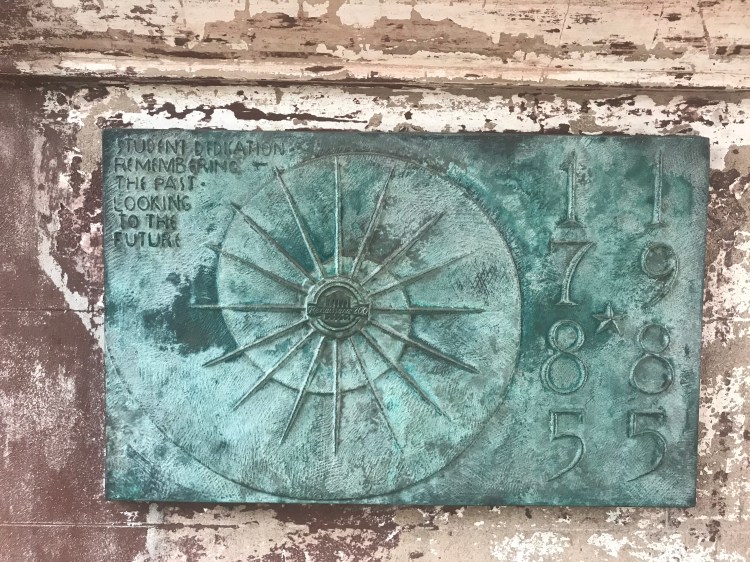
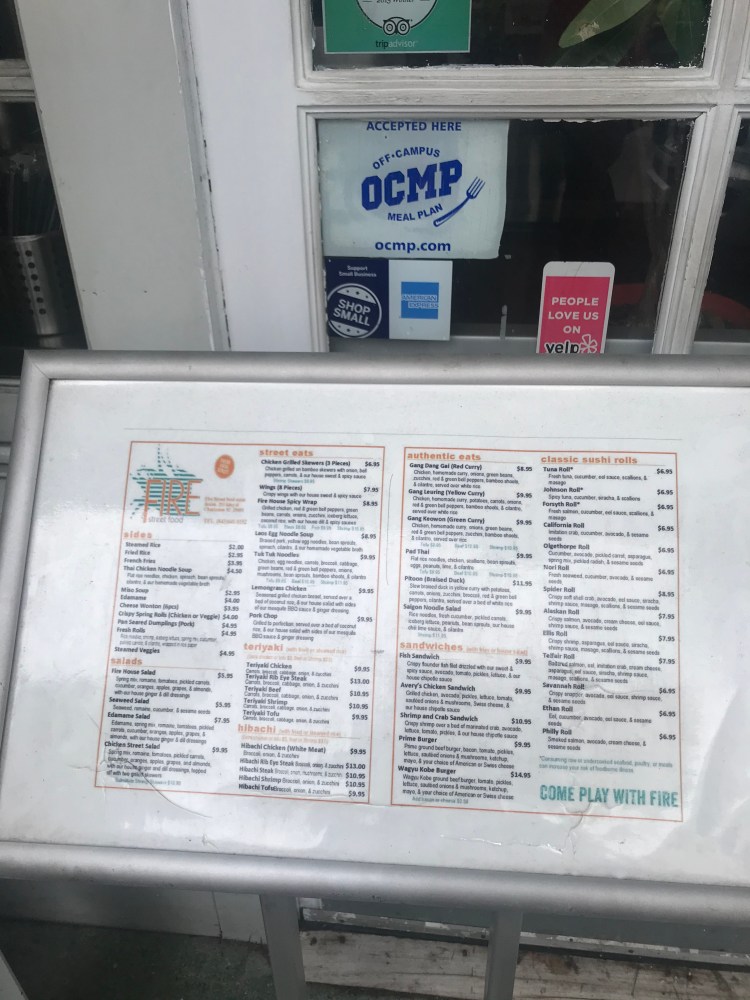
The basic definition of text is “A book or other written or printed work, regarded in terms of its content rather than its physical form”. As far as what text means to me, goes beyond that. Text helps us make sense of the world around us. It doesn’t just take place in the classroom either, it could be menus, posters, wall art, stickers, anything that you read, could write, or illustrate and has a meaning behind it. While walking around campus asking myself “What is Text?” I took a few pictures of what I thought some good examples were which was of a wall painted beside Willow Salon, a menu, a dedication picture in the walk way leading to the cistern etc. Text is all around us in art, pictures and words.


 Emily's Blog